
February 16, 2021
11:20 a.m. – 12:20 p.m.
Virtual Webinar
Please register in advance at: https://tinyurl.com/HSClecture
No charge to attend
Everyone is welcome from campus and community
Dr. Myisha Cherry describes herself as a philosopher striving to provide value and provoke thought. She’s primarily interested in the role of emotions and attitudes in public life. In her talk, Dr. Cherry will introduce a concept that she refers to as “racialized forgiveness.” She will argue that the practice of this type of forgiveness is morally objectionable because of its psychological origins, moral failures, and negative effects. She’ll then claim we need to practice forgiveness differently.
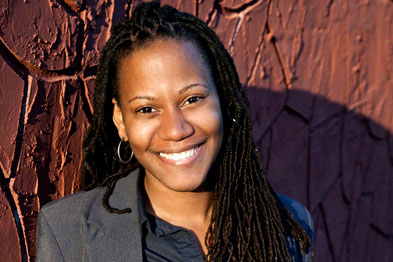 Myisha Cherry, Ph.D.
Dr. Cherry is an assistant professor of philosophy at the University of California, Riverside. Her research interest lies at the intersection of moral psychology and social and political philosophy. Cherry is also the host of the UnMute Podcast, a podcast where she interviews philosophers about the social and political issues of our day.
Cherry’s books include The Moral Psychology of Anger co-edited with Owen Flanagan (Rowman and Littlefield, 2018) and Unmuted: Conversations on Prejudice, Oppression, and Social Justice (Oxford University Press, 2019). Her next book, The Case for Rage: On the Role of Anger in Anti-racist struggle, will be released in Fall 2021 by Oxford University Press. After a 10-way auction, Princeton University Press won North American rights to her book “The Failures of Forgiveness.” It is slated for a Spring 2023 release. Cherry has also written about emotions and race in such journals as Hypatia, Radical Philosophy Review, and Critical Philosophy of Race.
The Harold Stoner Clark Lecture Series, endowed by the late Mr. Clark and sponsored by the Department of Philosophy, was established in 1985. For further information visit CalLutheran.edu/HSC or contact Lacey Davidson at: ljdavidson@callutheran.edu 805-493-3714.