MS in Quantitative Economics & Predictive Analytics
Cal Lutheran's MQEA program is a nationally ranked, 11-month graduate program that trains students to work as economists, quantitative analysts, and data scientists — and is designated as a Certified Forecaster Program by the International Institute of Forecasters (IIF).
Join Us for Our Next Event
Graduate Programs Open House
Thursday, Oct. 22, 2026 at
6:00 - 7:30 pm
Quick Facts
| Program Units 30 (10 courses) |
| Duration 11 months (full-time) |
| Flexibility On-campus courses Full-time or part-time course load |
| Course Availability Year-round in five 8-week terms |
Locations
|
| Program Costs |

Build the Skills Employers Are Looking For
The MQEA program trains you to think like an economist and work like a data scientist. You'll learn to build and interpret predictive models, run econometric analyses, and write code using today's leading tools — including AI-assisted programming. Graduates leave ready to contribute on day one at companies like Amazon, Google, Moody's, and beyond.
Want to learn more?
Let us know you're interested and we'll connect with you.
Graduate Programs Open House
Thursday, October 22, 2026 from 6:00 - 7:30 pm
Join us for an evening designed to help you explore what’s possible at Cal Lutheran. Connect with graduate school deans, program directors, current students, alumni and admission counselors in a relaxed, informal setting while learning more about our graduate programs and the Cal Lutheran experience. Whether you’re just beginning to consider graduate school or you’re ready to take the next step, this is an opportunity to ask questions, make connections and discover the program that can help you reach your academic and professional goals. During the Open House, enjoy light appetizers and refreshments while you: - Meet our graduate school deans and program faculty - Explore Cal Lutheran’s graduate degree programs - Hear firsthand from current students and alumni about their experiences - Learn about financial aid, scholarships and other funding opportunities - Get your questions answered through casual, one-on-one conversations We look forward to welcoming you to campus and starting the conversation about what’s next!
Our Reputation
 The MQEA program is officially designated as a Certified Forecaster Program by the International Institute of Forecasters (IIF) — the global authority on forecasting
education and research.
The MQEA program is officially designated as a Certified Forecaster Program by the International Institute of Forecasters (IIF) — the global authority on forecasting
education and research.- Cal Lutheran's MS in Quantitative Economics and Predictive Analytics is ranked #6 in the nation for Financial Economics (TFE Times, 2026), placing it among the top graduate economics programs in the United States.
- The MQEA program is fully accredited by both WASC (Western Association of Schools and Colleges) and ACBSP, ensuring the curriculum meets rigorous national standards for academic quality and business education.
Program Benefits
- This program is designed to allow you to complete your degree in as little as 11 months as a full-time student. View course schedule
- Graduates of the MQEA program have gone on to work as quantitative analysts, data scientists, and economists at companies including Amazon, Google, and Moody's.
- Close affiliation with Cal Lutheran's Center for Economic Research and Forecasting (CERF), recognized as one of the five most accurate forecasting organizations in the nation and a recipient of a 2024 Fannie Mae Crystal Ball Award.
Career Directions
MQEA graduates work as quantitative analysts, data scientists, economists, and financial forecasters at leading companies across tech, finance, healthcare, and government.
- Amazon
- Spotify
- IBM
- Amgen
- U.S. Bank
- Moody’s
- Penny Mac
- H & R Block
- JD Power
- Sallie Mae
- Capital One

Did you know?
Cal Lutheran is ranked as a Top 10 Best Value School among Regional Universities in the West.
U.S. News & World Report, 2026
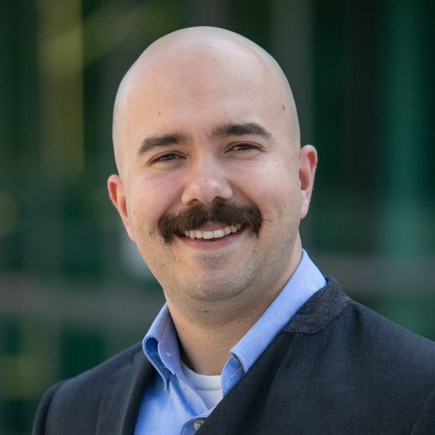
Jordan CampbellI entered the program looking to switch to a more technical career. I chose California Lutheran University’s program because I wanted a dense and application-focused program. The program met and exceeded my expectations, with bright faculty and a curriculum focused on preparing students for the job market.
Quantitative Analyst, Reason Foundation

David ReevesGoing into the interview process, I was already well-versed in EVIEWS, the newest software IHS was using. Some older software is no longer used in the field. Training with the most up-to-date technology gives you a huge advantage over other degree programs.
Lead Data Scientist, National Grid
FAQs
How long does it take to complete the MQEA program at Cal Lutheran?
Full-time students can complete the MS in Quantitative Economics and Predictive Analytics (MQEA) at California Lutheran University in as little as 11 months. The program consists of 30 units across 10 courses, offered year-round in five 8-week terms. Part-time students can also complete the program at a slower pace to accommodate work or personal commitments.
What are the admission requirements for the MQEA program?
Applicants to the MQEA program must hold a bachelor's degree from a regionally accredited institution with a GPA of 3.0 or higher in upper-division coursework. In addition, applicants must demonstrate quantitative proficiency through prior coursework: one year of calculus (grade of B or higher), at least one statistics course (grade of B or higher), one econometrics course (grade of B or higher), and some familiarity with computer programming. Applicants who do not fully meet prerequisite requirements may be eligible to take a foundation course the summer before enrollment.
How much does the MQEA program cost?
Tuition for the MQEA program is $910 per credit unit, with a total base cost of $27,300 for the full 30-unit program. Financial aid, scholarships, and veteran benefits are available to eligible students.
What courses are included in the MQEA curriculum?
The MQEA program includes 10 required courses covering micro and macro economic theory, economic policy analysis, econometrics (classical and extended models), time-series analysis, economic modeling and forecasting, financial economics, and two courses in data science and machine learning. Students build practical skills in computer programming, causal inference, and multi-equation forecasting systems throughout the program.
What careers do MQEA graduates typically pursue?
MQEA graduates go on to work as quantitative analysts, data scientists, economists, and forecasters across a wide range of industries. Alumni have been hired by high-profile employers including Amazon, Google, Spotify, IBM, Amgen, Moody's, Capital One, and the U.S. Bank, among others. The program prepares students for roles in the private sector, government agencies, and nonprofit organizations.
What makes Cal Lutheran's MQEA program different from a traditional data science or economics degree?
Unlike many analytics or data science programs, the MQEA program at Cal Lutheran combines rigorous technical training — including machine learning, econometrics, and predictive modeling — with deep economic and financial theory. Students learn not just how to build models, but how to interpret them through the lens of economic causality and policy analysis. The program is also one of a select few in the country designated as a Certified Forecaster Program by the International Institute of Forecasters (IIF).
Does the MQEA program offer hands-on or real-world experience?
Yes. MQEA students gain real-world experience through close affiliation with Cal Lutheran's Center for Economic Research and Forecasting (CERF). Working alongside faculty, students produce customized economic reports and forecasts for businesses, government agencies, and nonprofits — including the annual economic forecasts for Ventura and San Fernando Valley counties, as well as Oregon. CERF has been recognized as one of the five most accurate forecasting organizations in the nation, and received the 2019 Zillow Home Price Expectations Forecast Accuracy award as well as a 2024 Fannie Mae Crystal Ball Award.
Is the MQEA program available online or only on campus?
The MQEA program is offered on-campus at Cal Lutheran's Thousand Oaks, California location. Classes are held in an in-person, interactive format. While the program is not fully online, the year-round schedule with five 8-week terms — including evening and weekend course options — provides flexibility for students who are balancing work or other commitments alongside their studies.
Can current Cal Lutheran undergraduates earn the MQEA degree faster through the 4+1 option?
Yes. Cal Lutheran undergraduates majoring in economics, mathematics, or data science can take advantage of the 4+1 program, which allows them to begin taking MQEA graduate courses during their senior year as part of their normal undergraduate tuition. By doing so, they can earn their master's degree in just one additional year after completing their bachelor's degree — effectively earning both degrees in five years. Admission to the 4+1 pathway requires senior standing and a minimum GPA of 3.0.
Is the MQEA program accredited, and is Cal Lutheran a reputable institution?
Yes. The MQEA program is accredited by both the Western Association of Schools and Colleges (WASC) and the Accreditation Council for Business Schools and Programs (ACBSP), ensuring it meets rigorous national standards for academic quality. Cal Lutheran is ranked #6 in the nation for Financial Economics and has been named a Top 10 Best Value School among Regional Universities in the West by U.S. News & World Report (2025).